
【转自西南大学教育学部】
学部留学生赴贵州榕江参加社会实践活动
编者按
2026年寒假,2025级博士巴西留学生Lucas Alves Maciel(路昇煜)积极参加了教育学部贵州榕江县社会实践活动,深入探究中国少数民族文化与乡村教育。通过调研“班超”足球教育体系,他观察到体育课程如何提升学生身心健康及社区凝聚力。在苗、侗、水等民族聚居地,他亲历传统歌舞、村超足球赛等文化活动,感受到传统与现代教育的融合。团队协作与跨文化交流让Lucas反思巴西乡村教育问题,并深刻体会到中国教育者的奉献精神。实践经历使他重新思考教育本质,强调开放对话与共情的重要性。
Reflections on My Immersive Experience in “Exploring China”
——Turning life into a work of art, and sharing it with the world
As an international student of the 2025 cohort, I was fortunate to participate in the winter social practice researchhold by the Faculty of Educationbetween January 7 and 20, 2026.This gave mea greatopportunity to deeply appreciate China’s excellent traditional ethnic minority cultures.  I went to Rongjiang County, Guizhou Province, China, to discover, observe, conduct research, and exchange ideas while learning on-site about rural education through its actors and narratives.
The aim was to observe how local rural schools and districts are using a specific educational system to improve educational quality. The city of Rongjiang in Guizhou has a cultural intellectual property (IP) called Cunchao (Village Super League), a municipal football competition that unites dozens of villages around a locally organized tournament, attracting tourism and generating income for the region at both national and international levels. The city is also home to ethnic minorities such as the Shui, Miao, Dong, and Yao, who live in harmony with the Han (the country’s majority ethnic group). Thanks to this IP, many families have been able to return to work in their villages due to the economic activity brought by tourism; they can also promote the local rural lifestyle through festivals that showcase Cunchao culture. For example, Cunniu (Village Bull) is a local bullfighting event featuring regional buffaloes, held in a sustainable manner that promotes a culture of living in harmony with nature.
First, the group gathered  for literature research, discussions, and learning about rural culture at the Chongqing Bayu Farming Agriculture Museum. We were invited by local schools to study the Banchao system, an educational model that provides subsidies to implement 5 physical education classes per week focused on football practice, with the goal of building school teams. These teams compete internally and are selected for municipal inter-class competitions. The policy promotes a reduction in mobile phone addiction, prevention of vision deterioration, greater emotional intelligence by handling group conflicts, opportunities in the development of social interactions, greater emotional control, responsibility, and mental well-being; among other benefits observed by the interviewed teachers and principals. Such a system is designed to promote the integration of culture and arts in elementary education, extending to secondary education, where the initiative evolves into training professional athletes, generating sustainability for the local communities.
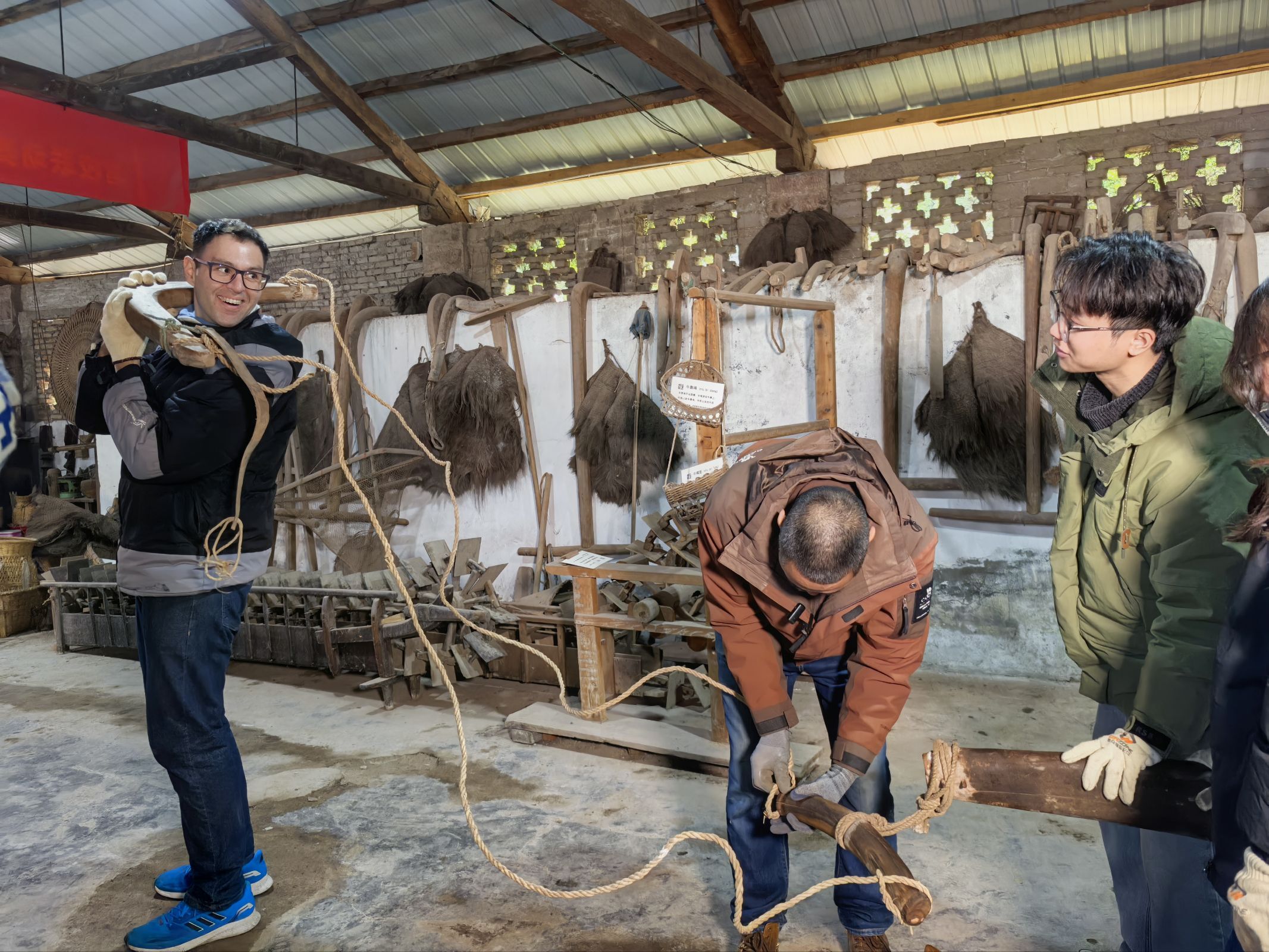
Some of the experiences were lived collectively, turning them into colorful communitarian memories. The color and life of the Bayu Farming Agriculture Museum can be found in Liu Gang (Brother Gang) and his family. Every morning, small groups would go to the museum to host social media livestreams about rural life.  How can one understand that the foundation of Chinese culture lies in rural life and agriculture without thinking of this family? Without their teachings that even for a livestream, tool cleaning must be done systematically, not just performatively? Without the script changes made in the heat of the moment to accommodate new teachings that Gang Ge wanted to share, in his natural and spontaneous way? Without the delicious, abundant home-cooked lunches, accompanied by conversations about country life under January’s shy sun? An important piece of knowledge encountered us in this stage: we must prepare as much as possible for every element we can control, and be open to the possibility of transforming the experience and ourselves through everything we cannot control. The unexpected gives color to life, and navigating it is exciting and intense.
This opened our hearts to  emotions, and to the singularities of people – they permeate our lives, and we must let ourselves be permeated by them. To understand this was essential to prepare for the schools we visited next. At the first school, we were able to spend four days with staff, teachers, and children: more than 350 perspectives and worlds, beautifully clashing with each other every day. Now, how to describe how bubbling, exciting, and simply “alive” was the experience? Translating it into clichés like “a mountain of smiles” is not eloquent enough, because the kids would really
  agglomerate fiercely like a mountain of affection around us, open to the new experience, trying to be part of this special disruption we brought to their daily lives. Living in that welcoming, talkative and playful atmosphere for four days made the winter-cold, simple environment suddenly come alive. Together, we all chose the colors we used to paint those memories. Waking up to a disembodied gentle voice from the loudspeakers, sharing the moment of eating surrounded by eager and curious students, the moment of watching classes while trying earnestly to understand what the teachers mean; and the moment when language barriers and daily routines broke down simultaneously, allowing everyone to simply gather to build something new and unexpected: dancing the life of Miao traditions. This dance was a breakthrough moment in aesthetic education. It started timidly as a performance from the professional dancers; but suddenly, each teacher, each student, each group member, started to join and breathe life, seriousness, shyness, playfulness, into tradition. In that moment, art was collectively built, and the past was actively lived.
At subsequent schools, we heard  principals and teachers passionate about their work, describing how their personal lives merge with their profession, earnestly asking for suggestions to improve their schools, or proudly showing their campuses. It became clear that the more beautiful and harmonious the school is, the more likely there is an educator behind it who makes their own life an art form. These special beings see no distinction between their personal goals and the well-being of the school community. It is truly an art to dedicate one own’s energy, time and passion to a collective dream, to something that is fully enjoyed by the whole community of children and adults. Meanwhile, those professionals would lay back, admiring proudly the final result of turning their own abstract dreams and ideas into concrete forms of harmony that bring joy to all. I want to be one of these educators, one day, translating my personal dream into a piece of art that can be enjoyed by all and bring warmth to the society.
All this while we understood the spirit of the city was deeply connected to their concrete manifestations of culture. The exciting Cunchao football system made me feel back in my homeland, Brazil: it was thrilling to see the passion for football echo in all the villages and bring competitive teams to intense matches, under the lazy Sunday atmosphere. The love for animals was also evident in Cunniu, where we saw crowds  gathered to watch their beloved water buffaloes showcased to the entire crowd in friendly competitions. There is something deeply artistic in a place where different people all gather for the same reason, and engage in the same emotion, a specific type of thrill towards something concrete, vibrant.
We also learned more about the Dong, Miao, and Shui cultures – the ethnic minorities who inhabit and build the city, giving meaning to its rivers and mountains, gently weaving stories into the unique geography and wrapping collective memory into a shared imaginary. Everything is alive, everything has meaning. Rivers, mountains, or even simple rocks and trees carry the proud legacy of early generations and sustain the living practice of today. A people story is enriched by ancient love stories and narrative of heroic adventures that shape their present. The past is alive in the city, and I believe we came close to truly experiencing it in the best moments of collective action.
 In the final days, while invaded by an inner emptiness as we felt art and collective life fade away to give way to the systematic research, we were suddenly confronted with ourselves: who is this diverse group of students passionate about rural education? The experiences sparked visceral conversations and debates about the future of education and philosophical ideals every night until 3 a.m. We would go to bed exhausted, barely able to speak or stand, but with a diffuse impression that something had changed inside, colored by the intense contact with ideas that were now shared and concrete. These were the moments that transformed us into a group: not always cohesive, but always with bubbling ideas and a profound sense of humanity and empathy.
This is the perfect timing to  add yet another perspective, which has been underlying this text since the beginning, but has not yet been fully acknowledged – it is time to leave the plural for a moment, and return to the lonely first-person singular, “I”. I am an international student from Brazil. So, during the whole practice, I have been struggling with the language barrier, the culture barrier, and the social norms. I could not have learned, felt and experienced any of this if it was not for the sheer generosity of prof. Li, the Faculty of Education, and the fellow Chinese students who were there, every day, struggling with me, embracing my presence, and, even though each was busy with their own work, they found time to guide me, translate for me, help with my research, keep me company at moments of loneliness… Everyone worked very hard so that this lonely first-person singular (“I”) and that solid collective of a third person plural (“they”) could turn into a “we”. I believe I would not be able to write this essay, with this collective perspective, if it was not for this generous act of inclusion. This is yet another example of how this social practice, in Confucian terms, not only discussed theory, but embraced the practice of virtue.
Allow me to briefly reflect upon what I believe is a common experience for several international students. Leaving one’s country and hitting the button “pause” on your personal life is not always easy. Even though coming to China is the fulfillment of a dream, going back to college and living a steep routine of studies can make one feel out of touch with reality. I firmly encourage all international students to pursue this: instead of staying only in theoretical study, seeing your days and weeks go by through the window while sitting in a chair; to be actually able to open up the routine a little and immerse yourself in China. If one does that, the borders of what they consider as the “self” will expand, and the work of art that is each of our existences will be enriched with the different tonalities provided by the different people we meet along the way.
When I say this, I am not only referring to the long, engaging discussions about the meaning of life, ethics of research, Chinese traditions, rural education, andXin Fathat we had, building together a knowledge that has not yet been written in any books. I also am not only referring to the opportunity to be in such a diverse and vibrant group that is completely dedicated to the educational cause, with undeniable and intense passion. And I am not only referring to the fact that, since we are in China, we must actually learn and try our best embody the Chinese spirit of education, the culture present in each object, each place and each relationship, the spirit of how to live and conduct life. So, what am I referring to?
Even far from our hometowns, we can still find deeply kind and warm relationships, in every corner, waiting to be fully developed. And they often lead to life-changing epiphanies we would not have if we were alone, locked inside ourselves. For instance, the trip made me think and rethink Paulo Freire’s power of dialogue, Nel Noddings’ power of care, and Confucius’ power of example. Every human experience can be treated as a learning opportunity, and everyone we meet has a universe within them (“when three people walk, one can be my teacher”). If we can step away from the rush of daily life to talk with them, or simply share some moments with them, always carrying empathy and openness in our hearts to the new; the world will undoubtedly become a more harmonious place, where every dialogue can become a work of art, and every experience can turn into warm memories of intense shared moments.
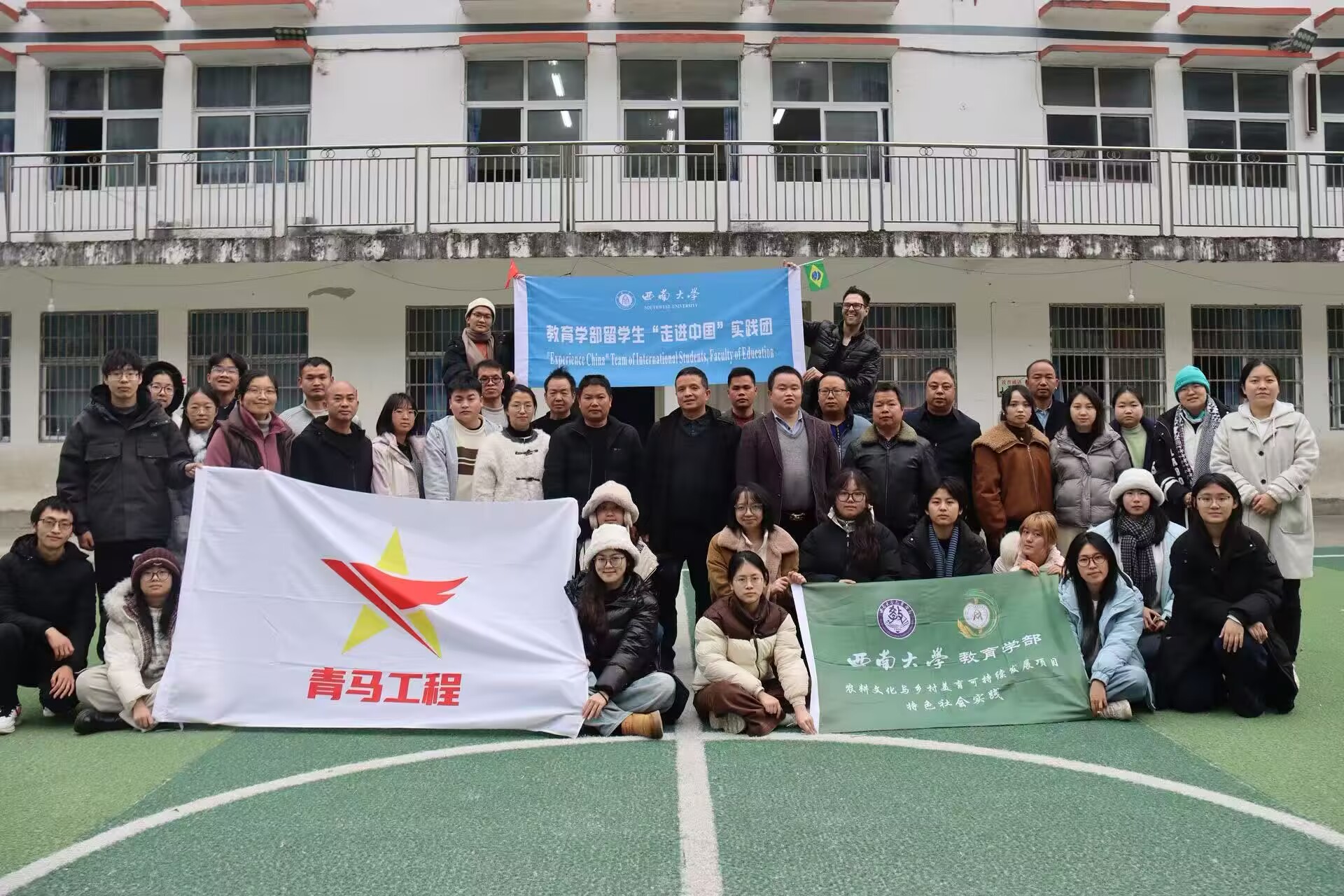
Objectively speaking, the social practice and research were successful, identifying model schools for the application of the Banchao system and describing it, as well as finding possible solutions for specific improvements in the visited rural boarding school. It demonstrated how differentiated education programs that value local traditions and promote the sustainability of rural areas are essential. The practice also presented interesting points for reflecting on rural education in Brazil, especially in my home state of Roraima, where the Basic Education Development Index is the worst in the country for high schools, and dropout rates are alarming. I intend to deepen the research, and find specific points that could be explored as potential enhancements to my local issues; while still contributing in what I can to China’s rural education. The schools we visited were models on how to conduct Basic Education correctly, with nutritious meals, safe housing and proper care for the students’ holistic education.
The group, collectively and through every one of its individuals, continues its struggle to transform rural education. But everyone will carry the awareness that every interaction, every experience, and every person is part of the thread that weaves this transformation. All these memories are now shared, and are eagerly waiting to come to life again, bringing the chaos of life to our falsely built routine. This is, in a sense, harmony.
撰写人:Lucas Alves Maciel(路昇煜)
初 审:李雪垠
复 审:王 雪
终 审:王正青
【中文译文】
沉浸式“行走中国”实践感悟
——把生活过成艺术,与世界共享
作为2025级国际学生,我有幸参加了2026年1月7日至20日由教育学部举办的寒假社会实践调研活动。这次经历让我得以深度领略中国优秀的少数民族传统文化。我走进中国贵州省榕江县,在实地调研、观察、交流与学习中,亲身感受乡村教育的真实样态与鲜活故事。
本次调研旨在观察当地乡村学校与区域如何通过特色教育体系提升教育质量。贵州榕江拥有“村超”这一文化IP——一项由数十个村庄共同参与的市级足球赛事。它不仅吸引了国内外游客,也为当地带来了实实在在的旅游收入与发展机遇。榕江还聚居着水族、苗族、侗族、瑶族等少数民族,与汉族同胞和谐共生。得益于“村超”IP,许多家庭因旅游经济返乡就业,也通过各类节庆活动展示“村超”文化,推介当地乡村生活。例如“村牛”——以本地水牛为特色的斗牛活动,以可持续方式举办,传递着人与自然和谐共生的文化理念。
实践团首先在重庆巴渝农耕文化博物馆开展文献研读、座谈交流与乡村文化学习。我们受邀走进当地学校,调研“班超”教育模式:学校通过经费支持,每周开设5节以足球为核心的体育课,组建校级球队,开展校内比拼并选拔队伍参加市级班级联赛。受访教师与校长表示,这一政策有效减少了学生手机沉迷、预防视力下降,提升了学生处理集体矛盾的情商、社交能力、情绪自控力、责任感与心理健康水平。该体系旨在推动文化与艺术融入小学教育,并延伸至中学阶段,逐步培养专业体育人才,为地方发展注入可持续动力。
许多经历成为我们共同的珍贵回忆。巴渝农耕文化博物馆的烟火与生机,浓缩在刘刚(刚哥)一家的日常里。每天清晨,实践小分队都会来到博物馆,开展乡村生活主题的新媒体直播。如果不了解这一家人,我们怎能真正读懂中国文化扎根于乡土与农耕的根基?如果没有他们的言传身教——哪怕是一场直播,农具也要认真整理、而非流于形式;如果没有刚哥用自然随性的方式,临场调整脚本,只为分享最真切的感悟;如果没有一月暖阳下丰盛可口的家常午餐,以及关于乡村生活的促膝长谈……我们便不会懂得:要尽力做好每一件可控之事,也要坦然接纳所有不可控之事带来的改变与成长。意外,让生活更有色彩;直面意外,本身就充满激情与力量。
这段经历让我们敞开心扉,感受人与人之间的独特与真挚——它们浸润着生活,我们也应坦然接纳。理解这一点,为我们后续走进学校打下了重要基础。在第一所学校,我们与教职工、老师和孩子们共度了四天。三百五十多个鲜活的视角与世界,每天都在美好地碰撞。该如何形容这段经历的鲜活、热烈与纯粹?用“笑容如山”这类陈词已不足以表达——孩子们会像一座充满爱意的小山,紧紧簇拥在我们身边,满怀好奇地拥抱新体验,主动融入这场打破日常的特别相遇。四天里,这份热情、健谈与欢乐,让冬日清冷、朴素的环境
瞬间焕发生机。我们一同用色彩描绘这段记忆:清晨从广播里传来温柔的声音;与热切好奇的同学们一同用餐;认真听课、努力理解老师的讲解;当语言隔阂与日常节奏一同消融,所有人自然而然地相聚,共同创造全新的惊喜——跳起苗族传统舞蹈。这支舞蹈成为美育的破局时刻:起初只是专业舞者略显羞涩的表演,可转眼间,每一位老师、每一名学生、每一位实践团成员都加入进来,为传统注入生命、认真、腼腆与灵动。那一刻,艺术由众人共创,历史被鲜活地演绎。
在后续走访的学校里,我们见到了满怀教育热忱的校长与教师。他们将个人生活与职业理想融为一体,真诚请教办学建议,自豪地展示校园。我们愈发清晰地感受到:一所学校越是美好和谐,背后越有一位把生活过成艺术的教育者。他们将个人追求与学校共同体的幸福融为一体。把精力、时间与热爱献给集体梦想,献给能让所有孩子与成人共同受益的事业,本身就是一门艺术。而这些教育工作者会从容回望,骄傲地见证抽象的梦想与理念,化作实实在在的和谐与幸福。我也希望有一天,能成为这样的教育者,把个人梦想化作人人可享的艺术,为社会带去温暖。
在这一过程中,我们读懂了这座城市的精神与文化具象紧密相连。激动人心的“村超”足球体系,让我仿佛回到了故乡巴西。看到足球热情在各个村庄涌动,球队在闲适的周日氛围里激烈比拼,我倍感振奋。对动物的热爱在“村牛”活动中同样真切可见:人们欢聚一堂,为心爱的水牛加油助威,观看友好的比拼。当不同的人为同一件事相聚、共情,为真实而鲜活的事物共同激动,这本身就充满艺术之美。
我们还深入了解了侗族、苗族、水族文化——这些世居于此的少数民族,为这里的山水赋予意义,将故事编织进独特的地理风貌,把集体记忆融入共同的精神家园。万物有灵,万物皆有意义。江河、山峦,乃至一石一木,都承载着先辈的骄傲传承,支撑着当下的生活实践。古老的爱情传说与英雄史诗,丰富着民族的故事,塑造着当下的生活。历史在这座城市里活着,而我们在那些集体行动的美好瞬间,真正贴近了它。
实践最后几天,当艺术与集体生活渐渐淡去,回归系统调研时,内心不免空落。我们也直面内心:这群心系乡村教育的各国学子,究竟是谁?每晚,这些经历都激发出发自内心的交流与辩论,探讨教育的未来与哲学理想,直至凌晨三点。我们疲惫入睡,几乎无力言语站立,却清晰地感受到:内心已有改变,被那些真切、可感的共同理念所点亮。正是这些瞬间,让我们成为一个集体——未必时刻步调一致,却永远思想鲜活,满怀人文关怀与同理心。
此刻,我想换一个视角。这一视角贯穿全文,却尚未被正式言说——是时候暂时放下“我们”,回到孤独却真实的第一人称“我”。我是一名来自巴西的国际学生。整个实践期间,我都在克服语言障碍、文化差异与社交规范的挑战。如果没有李老师、教育学部以及中国同学们毫无保留的善意与帮助,我不可能学到、感受到、体验到这一切。他们每天与我并肩面对困难,接纳我的存在,即便各自忙碌,仍抽出时间为我引导、翻译、协助调研、陪伴我度过孤独时刻……所有人的努力,让这个孤独的“我”与坚实的“他们”,变成了温暖的“我们”。我相信,如果没有这份包容与接纳,我便无法以集体视角写下这篇文章。这也正是此次社会实践的意义所在:用儒家的话说,它不止于理论探讨,更践行了德性与仁心。
请允许我简要分享一段我相信许多国际学生都感同身受的经历:离开祖国,按下个人生活的“暂停键”从来都不容易。尽管来到中国是圆梦之旅,但回归校园、投入紧张的学习节奏,仍会让人感到与现实脱节。我真心鼓励所有国际学生:不要只停留在书本理论,不要坐在教室里看着时光从窗前流逝;请试着打破日常,真正沉浸在中国的土地上。如此,你对“自我”的边界会被拓宽,而我们每个人这本“生命艺术之作”,也会因途中遇见的不同灵魂,增添更丰富的色彩。
我所说的,不只是我们关于生命意义、研究伦理、中华传统、乡村教育与“心法”的深入长谈,共同构建着尚未被书写的知识;不只是有幸加入这样一个多元鲜活、全心投身教育事业、满怀炽热热忱的集体;也不只是身在中国,便要真正学习并努力践行中国教育精神、融入每一件器物、每一处场所、每一段关系中的文化,以及为人处世的智慧。那么,我真正想说的是什么?
即便远离故乡,我们仍能在每一个角落遇见真挚温暖的情谊,等待我们用心浇灌。而这些情谊,往往会带来独处时无法拥有的、改变人生的顿悟。例如,这次旅程让我反复思考保罗·弗莱雷对话的力量、内尔·诺丁斯关爱的力量,以及孔子身教的力量。每一段人生经历都可成为学习的契机,我们遇见的每一个人心中都有一个宇宙——“三人行,必有我师焉”。若我们能放下生活的匆忙,与他们交谈、相伴,心怀同理心与开放之心接纳新事物,世界必将更加和谐。每一次对话都可成为艺术,每一段经历都能化作温暖而深刻的共同记忆。
客观而言,此次社会实践与调研取得了圆满成功:我们梳理并总结了“班超”模式的示范校案例,为走访的乡村寄宿学校提出了具体改进思路。调研充分证明:立足本土传统、助力乡村可持续发展的差异化教育项目至关重要。这次实践也为反思巴西乡村教育提供了有益借鉴,尤其是在我的家乡罗赖马州——那里的高中基础教育发展指数位居全国末位,辍学率令人担忧。我希望深化研究,寻找可借鉴的具体路径,改善当地教育现状,同时也尽己所能,为中国乡村教育贡献力量。我们走访的学校,正是基础教育高质量发展的典范:营养均衡的膳食、安全的住宿、对学生全人发展的悉心呵护。
实践团的每一个人、整个集体,仍在为改变乡村教育而努力。但我们都深知:每一次相遇、每一段经历、每一个人,都是编织这场变革的丝线。所有这些记忆已成为共同的财富,正等待着再次被唤醒,为我们看似规整的日常,注入生活本真的鲜活与力量。从某种意义上说,这,就是和谐。
最近更新时间:2026.3.18
摄 影:农耕文化教育创新社
审 核:李雪垠
编 辑:姚堰缤